
Character: It’s what’s on trial
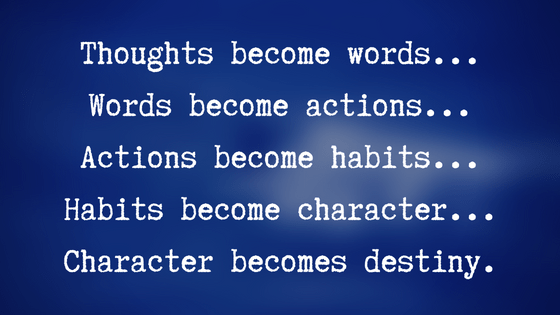
Growing up my parents impressed heavily on me the importance of character. We start building them as children. Listening to mom and dad leads to respect for elders; clean-up time leads to personal responsibility; sharing leads to empathy. It’s a binding set of unspoken rules that we can reference, and it leads people to act and react a certain way. Generally, a person’s character is constant and can offer glimpses of how the person grew up and the circumstances they have faced (good or bad). Single actions don’t necessarily define a person’s character, but a pattern of the same repetitive action certainly does.
“All our actions—however great or small—emerge from the wellsprings of our personalities.” – John D. Mayer
While reading John Mayer’s book, “Personal Intelligence: The Power of Personality and How It Shapes Our Lives”, I couldn’t help but think of the character of President Trump. I’ve repeatedly stated that It’s one thing to feel a certain way about a particular policy, and another to like or dislike a person for who they are. But people naturally look within themselves- their beliefs and moral compass- to decide on public policy. So the danger is that if nobody talks about a public figure’s character, their behavior goes unchecked. In the political arena, it’s related to a concept called the Overton Window (I’ll blog on this later) in which extreme ideas or behaviors start becoming normal.
“…the character of a person who expresses a political opinion is quite relevant to evaluating her beliefs and leadership.” – John D. Mayer
I don’t pretend to fully understand the president’s character- and neither should you. The reality is that no amount of social media or news coverage allows the common person to really know a person (you can’t judge a book by its cover). But, we can make some reasonable assertions based on characteristics that are plainly displayed time after time when someone speaks (or tweets). Here are some that I have observed:
- Pros: charismatic; entertaining; strong negotiating skills
- Cons: comparatively critical; disregard for rules/norms (can also be a pro); a liar
Yes, liar. Embellishing and exaggerating (however common and innocent they may seem) are forms of lying. Don’t fact check me on this, but I think the current White House Office of the Press Secretary has the record for answering the most questions aimed at clarifying what the president “means” when he says something.
The Principle
Every administration will have its pros and cons. While much television time is devoted to specific current events, the words, actions, habits, and character of our leaders determine our destiny as a country. Depending on a person’s motive, good and bad characteristics can be used to achieve wonderful or terrifying outcomes. There are phycologists and organizations devoted to characterizing presidential candidates and the information is publicly available. Based on the sources listed below, which somewhat overlap in their assessments, the president is ambitious, controlling/confrontational, outgoing/congenial, and erratic/unpredictable. Judge for yourselves.

 Based on Principle
3 Responses to “Character: It’s what’s on trial”
Yes, character is important and a very good post.
I think if we go back throughout presidencies, we will find that we have had character flawed leadership for quite some time. We have had presidents who committed sexual misbehaviors, presidents who lie, presidents who were self-serving and the list can go on.
As a pastor, I can only give a Christian perspective which is: in all and through all, God can still work through a vessel even through theirs flaws.
There was a King David, who committed murder and adultery; King Artaxerxes–a false god worshipper used to the reconstruction of Jerusalem’s temple; a Christian persecutor Saul, who was renamed Paul, who wrote close to 2/3 of the NT. All of these were flawed in character but God was able to use them.
Since physically speaking there isn’t much one can do, what pro-active effort can one exert?
1 Tim 1:1 I urge, then, first of all, that petitions, prayers, intercession and thanksgiving be made for all people— 2 for kings and all those in authority, that we may live peaceful and quiet lives in all godliness and holiness. 3 This is good, and pleases God our Savior,
Prov 21:1 The king’s heart is in the hand of the LORD, as the rivers of water: he turneth it whithersoever he will.
Prayer, apparently, can actually create change for the better. Not that we shouldn’t do things physically such as vote, write letters, voice our opinions etc. but not the one without the other.
Obviously, it is easy to point out flaws in people as I wonder how many character flaws we ourselves hide in our own closets. But change can happen and prayer can be the catalyst. IMO.
If a president has godly council and influences, perhaps with prayer God can create the right banks to turn the water of a president’s heart and, regardless of their flaws, have him end up make right decisions.
On a side note… I always wonder if there was an overtly Christian president-aspiring man or woman with great character, if they would end up being crucified because of his religious beliefs and never make the office of the President.
LikeLiked by 1 person
Mr. Delgado (can I call you Ken or Pastor Ken?), I love and respect your perspective on this. Thank you for the thorough response- it gives hope that where two or more are praying for God’s guidance over this presidency the nation can be steered towards favorable outcomes. I think I’d forgotten that one of the most powerful tools we have as concerned citizens and individiuals with faith, is prayer.
I still can’t erase the possibility that such a volatile character will leave us more isolated from allies than ever before, internally polarized and divided as citizens, and on the offense with more countries than ever before. Does the Bible reference diplomatic relations at all? Just curious.
On your side note, I think that could be more of a reality now that religion is so scrutinized. I found this link on historical openly Christian presidents, though I’m uncertain of the source’s validity: https://religionnews.com/2015/02/16/u-s-presidents-religious/ There are a few good men on this list!
LikeLike
You can call me Ken 🙂
Thanks for your views! And certainly to know that someone else is applying their faith through prayer “pumps me up”!
It is true that “isolation” is always a possibility but I believe the fore-fathers understood potentials more than what we think thus instituted a two-term policy that affords us the capacity to change directions. That, along with a government divided into three entities (executive, judicial, legislative) gives us necessary checks and balances so that decisions aren’t long lasting.
It would appear to me that polarization has been going on for some time and we just reaching a flashpoint. History tends to repeat itself. Division is not just on the political scene but between men in blue and in the citizenry, between atheists and religious, between corporate America and employees. It seems to be proliferating in all areas of life.
Looking at the site of “religion”, I’m not quite sure of its veracity either. Not that those mentioned weren’t religious, but who is the one who decides that Carter was more religious that George Washington? Seems to be more of a personal subjective decision.
LikeLiked by 1 person